
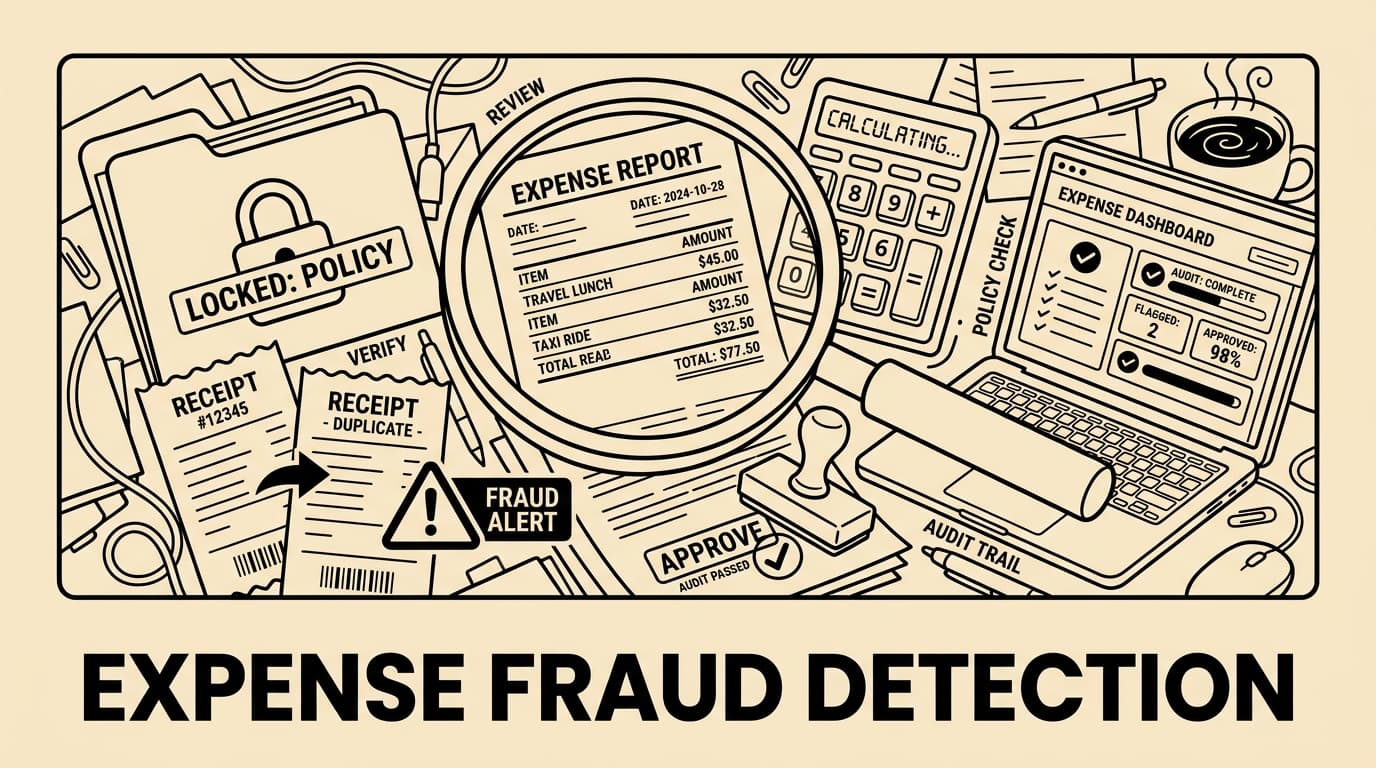
Fusk i utläggsrapporter börjar ofta med små tecken: saknat kvitto, avrundat belopp eller otydligt affärssyfte. Ekonomiteam behöver skilja ärliga misstag från återkommande mönster.
En bra process gör det lätt att göra rätt. Den samlar datum, leverantör, belopp, valuta, kategori, syfte, godkännande och kvittobild i ett spårbart underlag.
Hur fusk ser ut i vardagen
The most useful controls are simple enough to apply every month and specific enough to create comparable evidence across the team.
- Duplicate receipts or repeated amounts should be checked before reimbursement.
- Personal costs must not be hidden as client, travel, or office expenses.
- Late claims need additional context because memory and evidence become weaker.
- Approval thresholds should not encourage people to split expenses artificially.
- Cash-heavy and handwritten evidence should follow a documented exception process.
Documenting the reason for each exception is as important as finding the exception itself, because it prevents arbitrary decisions and creates a repeatable audit trail.
For small and mid-sized teams, the practical goal is not a perfect investigation system. The goal is a consistent process where normal claims are easy, exceptions are visible, and approvals can be explained later.
Varför manuell granskning missar mönster
Manual review sees one claim at a time; structured data reveals repeated merchants, dates, and amounts.
Consistent fields make comparison fair across employees, projects, and countries.
For small and mid-sized teams, the practical goal is not a perfect investigation system. The goal is a consistent process where normal claims are easy, exceptions are visible, and approvals can be explained later.
Varningssignaler för ekonomi
The most useful controls are simple enough to apply every month and specific enough to create comparable evidence across the team.
- Duplicate receipts or repeated amounts should be checked before reimbursement.
- Personal costs must not be hidden as client, travel, or office expenses.
- Late claims need additional context because memory and evidence become weaker.
- Approval thresholds should not encourage people to split expenses artificially.
- Cash-heavy and handwritten evidence should follow a documented exception process.
Documenting the reason for each exception is as important as finding the exception itself, because it prevents arbitrary decisions and creates a repeatable audit trail.
For small and mid-sized teams, the practical goal is not a perfect investigation system. The goal is a consistent process where normal claims are easy, exceptions are visible, and approvals can be explained later.
Ett praktiskt kontrollramverk
Write one clear expense policy and keep approval thresholds visible.
Capture receipts immediately, while business purpose and participants are fresh.
Use risk-based review so ordinary claims move quickly and unusual claims receive deeper checks.
For small and mid-sized teams, the practical goal is not a perfect investigation system. The goal is a consistent process where normal claims are easy, exceptions are visible, and approvals can be explained later.
Hur automatisering hjälper
Automation reads receipt data, standardises fields, and flags missing information before submission.
It supports judgement; it does not replace a finance decision about intent or policy exceptions.
For small and mid-sized teams, the practical goal is not a perfect investigation system. The goal is a consistent process where normal claims are easy, exceptions are visible, and approvals can be explained later.
Implementeringslista
The most useful controls are simple enough to apply every month and specific enough to create comparable evidence across the team.
- Define required fields for every claim.
- Check duplicates and missing receipts before payment.
- Keep an audit trail for submission, approval, edits, and reimbursement.
- Review monthly patterns by employee, merchant, category, and project.
Documenting the reason for each exception is as important as finding the exception itself, because it prevents arbitrary decisions and creates a repeatable audit trail.
For small and mid-sized teams, the practical goal is not a perfect investigation system. The goal is a consistent process where normal claims are easy, exceptions are visible, and approvals can be explained later.
FAQ
What counts as fraud? A claim that intentionally misstates amount, purpose, timing, or evidence.
Are missing receipts fraud? Not automatically; they need a documented exception workflow.
Can software prove intent? No; it can highlight inconsistencies and support human review.
For small and mid-sized teams, the practical goal is not a perfect investigation system. The goal is a consistent process where normal claims are easy, exceptions are visible, and approvals can be explained later.
Bill.Dock workflow
Bill.Dock hjälper team att göra kvittofoton till strukturerade utläggsrapporter, så ekonomi kan fokusera på undantag.
Conclusie / Fazit
Detektion fungerar bäst när den är förebyggande, konsekvent och evidensbaserad.
A useful monthly review starts with a small sample of approved claims and a separate list of exceptions. Compare the claims against policy, receipt quality, business purpose, and approval notes. If reviewers find the same missing field repeatedly, fix the intake form rather than blaming individual employees.
Finance teams should also separate prevention from investigation. Prevention means clearer forms, earlier receipt capture, and automatic checks. Investigation means following up when a pattern remains unexplained. Keeping those steps separate makes the process calmer and fairer.
Finally, communicate the process in plain language. Employees are more likely to submit complete reports when they understand what finance needs and why it matters for reimbursement, tax records, and company trust.
A useful monthly review starts with a small sample of approved claims and a separate list of exceptions. Compare the claims against policy, receipt quality, business purpose, and approval notes. If reviewers find the same missing field repeatedly, fix the intake form rather than blaming individual employees.
Finance teams should also separate prevention from investigation. Prevention means clearer forms, earlier receipt capture, and automatic checks. Investigation means following up when a pattern remains unexplained. Keeping those steps separate makes the process calmer and fairer.
Finally, communicate the process in plain language. Employees are more likely to submit complete reports when they understand what finance needs and why it matters for reimbursement, tax records, and company trust.
A useful monthly review starts with a small sample of approved claims and a separate list of exceptions. Compare the claims against policy, receipt quality, business purpose, and approval notes. If reviewers find the same missing field repeatedly, fix the intake form rather than blaming individual employees.
Finance teams should also separate prevention from investigation. Prevention means clearer forms, earlier receipt capture, and automatic checks. Investigation means following up when a pattern remains unexplained. Keeping those steps separate makes the process calmer and fairer.
Finally, communicate the process in plain language. Employees are more likely to submit complete reports when they understand what finance needs and why it matters for reimbursement, tax records, and company trust.
A useful monthly review starts with a small sample of approved claims and a separate list of exceptions. Compare the claims against policy, receipt quality, business purpose, and approval notes. If reviewers find the same missing field repeatedly, fix the intake form rather than blaming individual employees.
Finance teams should also separate prevention from investigation. Prevention means clearer forms, earlier receipt capture, and automatic checks. Investigation means following up when a pattern remains unexplained. Keeping those steps separate makes the process calmer and fairer.
Finally, communicate the process in plain language. Employees are more likely to submit complete reports when they understand what finance needs and why it matters for reimbursement, tax records, and company trust.
A useful monthly review starts with a small sample of approved claims and a separate list of exceptions. Compare the claims against policy, receipt quality, business purpose, and approval notes. If reviewers find the same missing field repeatedly, fix the intake form rather than blaming individual employees.
Finance teams should also separate prevention from investigation. Prevention means clearer forms, earlier receipt capture, and automatic checks. Investigation means following up when a pattern remains unexplained. Keeping those steps separate makes the process calmer and fairer.
Finally, communicate the process in plain language. Employees are more likely to submit complete reports when they understand what finance needs and why it matters for reimbursement, tax records, and company trust.
A useful monthly review starts with a small sample of approved claims and a separate list of exceptions. Compare the claims against policy, receipt quality, business purpose, and approval notes. If reviewers find the same missing field repeatedly, fix the intake form rather than blaming individual employees.
Finance teams should also separate prevention from investigation. Prevention means clearer forms, earlier receipt capture, and automatic checks. Investigation means following up when a pattern remains unexplained. Keeping those steps separate makes the process calmer and fairer.
Finally, communicate the process in plain language. Employees are more likely to submit complete reports when they understand what finance needs and why it matters for reimbursement, tax records, and company trust.
A useful monthly review starts with a small sample of approved claims and a separate list of exceptions. Compare the claims against policy, receipt quality, business purpose, and approval notes. If reviewers find the same missing field repeatedly, fix the intake form rather than blaming individual employees.
Finance teams should also separate prevention from investigation. Prevention means clearer forms, earlier receipt capture, and automatic checks. Investigation means following up when a pattern remains unexplained. Keeping those steps separate makes the process calmer and fairer.
Finally, communicate the process in plain language. Employees are more likely to submit complete reports when they understand what finance needs and why it matters for reimbursement, tax records, and company trust.