
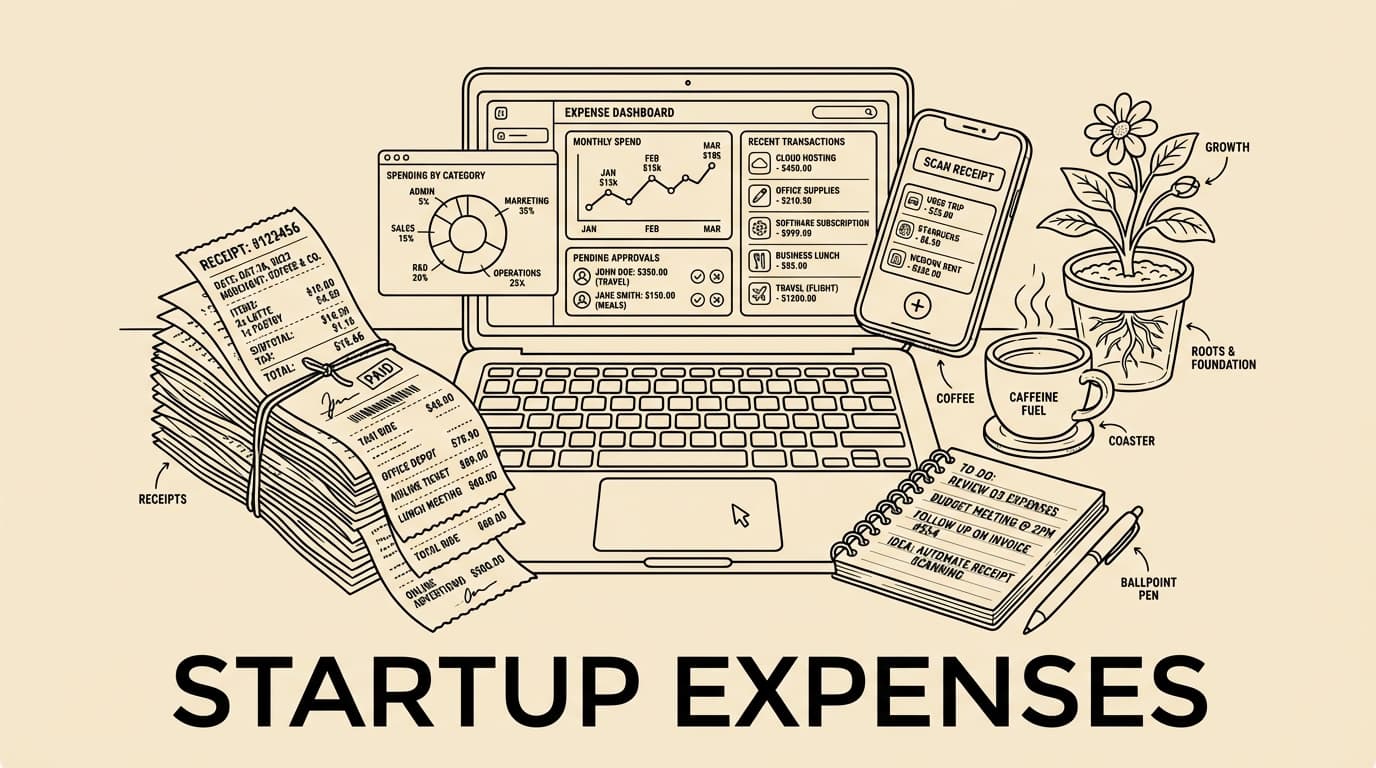
Managing expenses is one of the most critical — and most overlooked — aspects of running a startup or freelance business. In the early stages, cash flow is king, and a lack of visibility into your spending can quickly derail even the most promising venture. Whether you're a solo freelancer tracking client-related costs or a founder scaling a small team, having a disciplined approach to expense management isn't just good practice — it's survival strategy. This guide walks you through the core principles, tools, and processes that will help you stay in control of your finances from day one.
Why Expense Management Matters More for Startups
Unlike established businesses with dedicated finance teams and predictable revenue streams, startups operate in a state of constant uncertainty. Every pound or dollar spent carries extra weight because runway — the number of months your business can operate before running out of cash — is finite. Poor expense management leads to budget overruns, missed tax deadlines, and inaccurate financial projections that can mislead investors.
For freelancers, the stakes are equally high. Without proper tracking, you may miss legitimate business deductions, overbill or underbill clients, and fail to set aside enough for quarterly tax payments. Effective expense management transforms chaos into clarity, giving you the financial intelligence to make better decisions.
Studies show that small businesses lose an average of 5% of annual revenue to fraud and poor expense controls. More commonly, they simply lose track of recurring subscriptions, vendor payments, and team expenses that quietly compound over time. Building good habits early prevents these expensive mistakes.
Setting Up Your Expense Tracking System
The foundation of good expense management is a consistent, reliable tracking system. In the earliest days, a spreadsheet might suffice, but it quickly becomes unwieldy as transactions multiply. Dedicated software like Bill.Dock gives you real-time visibility into every expense, automates categorisation, and integrates with your bank accounts to eliminate manual data entry.
Start by establishing a chart of accounts — a structured list of expense categories relevant to your business. Typical categories for startups include:
- Software & SaaS: subscriptions to tools your team uses daily
- Marketing & Advertising: ad spend, content creation, PR
- Travel & Accommodation: client visits, conferences, team offsites
- Office & Equipment: rent, furniture, hardware
- Professional Services: legal, accounting, consultancy fees
- Salaries & Contractor Fees: payroll and freelancer payments
Assign every transaction to a category immediately — don't let receipts pile up. A weekly reconciliation habit (30 minutes every Friday) will keep your books clean and your anxiety low.
Receipt Management and Documentation
HMRC in the UK and the IRS in the US both require businesses to retain supporting documentation for tax-deductible expenses. For most business expenses, you need to keep records for at least six years. Gone are the days of shoeboxes full of crumpled receipts — modern expense management tools allow you to photograph receipts on your phone immediately after a purchase, with OCR technology automatically extracting the vendor, date, and amount.
Best practices for receipt management:
- Capture receipts at the point of purchase, before they're lost or faded
- Store digital copies in cloud-based software with automatic backup
- Add a note explaining the business purpose for each expense
- Separate personal and business expenses strictly — use a dedicated business bank account and card
Bill.Dock's receipt scanning feature makes this process seamless, letting you upload receipts directly from your mobile device and automatically match them to bank transactions.
Budgeting and Forecasting
Reactive expense management — simply recording what you've spent — is necessary but insufficient. Proactive businesses build budgets and compare actuals against those budgets monthly. This budget-versus-actual analysis is the single most powerful tool for understanding whether your business is on track.
Start with a simple monthly budget broken down by department or expense category. For startups pre-revenue, base your budget on your runway target: if you've raised £200,000 and want 18 months of runway, your monthly burn rate should not exceed approximately £11,000. For freelancers, budget against your average monthly revenue, setting aside roughly 25-30% for taxes, 10-15% for business expenses, and the remainder as take-home pay.
Review your budget-vs-actual report at the start of each month. Look for categories consistently over budget — these are your warning signals. Look for categories persistently under budget — these may represent opportunities to invest more in growth.
Forecasting goes one step further, projecting future expenses based on planned activities. If you're hiring two engineers next quarter, your payroll line will increase by a predictable amount. Good forecasting prevents nasty surprises.
Controlling Team Expenses and Approvals
As your startup grows beyond just the founder, expense management becomes a team sport. Without clear policies and approval workflows, team members may spend freely on things that don't align with company priorities. Establishing an expense policy early — even a one-page document — sets expectations and prevents conflict.
A minimal expense policy should cover:
- Spending limits by category: e.g., meals up to £30 per person, flights must be economy unless over 5 hours
- Pre-approval requirements: any single expense over £500 requires manager sign-off
- Reimbursement timeline: expenses submitted within 30 days are reimbursed within 7 business days
- Prohibited expenses: personal entertainment, luxury hotels without prior approval
Expense management platforms with built-in approval workflows — like Bill.Dock — make it easy to route expenses through the right approvers without email chains or spreadsheet gymnastics.
Tax Efficiency and Deductible Expenses
One of the most tangible benefits of rigorous expense tracking is maximising your legitimate tax deductions. For UK businesses, allowable business expenses can significantly reduce your corporation tax or self-assessment liability. Commonly missed deductions include:
- Home office costs (for remote workers and freelancers)
- Professional development and training
- Subscriptions to industry publications and software
- Bank charges and merchant fees
- Mileage for business travel (HMRC's approved mileage rate is 45p per mile for the first 10,000 miles)
Frequently Asked Questions
What's the difference between an expense and a capital expenditure?
An expense is a cost that provides benefit within a single accounting period (e.g., monthly software subscription). A capital expenditure (CapEx) is a purchase of an asset with a useful life extending beyond one year (e.g., a laptop or server). CapEx is typically depreciated over time rather than expensed immediately.
How long should I keep expense records?
In the UK, HMRC requires businesses to keep records for at least 6 years from the end of the relevant accounting year. In the US, the IRS recommends keeping records for 3-7 years. When in doubt, keep records longer — cloud storage is cheap.
Should I use a business credit card or debit card?
A dedicated business credit card offers several advantages: it separates personal and business spending automatically, provides a float to manage cash flow, and often includes rewards or cashback. Just ensure the balance is paid in full monthly to avoid interest charges.
Can I deduct meals and entertainment expenses?
In the UK, business entertainment (meals with clients) is generally not deductible for corporation tax purposes, though staff entertainment up to £150 per head per year is allowable. In the US, the IRS allows 50% deduction of business meal expenses. Always check current rules with a qualified accountant.
When should I upgrade from a spreadsheet to expense management software?
If you're spending more than 2 hours per month on expense tracking, making errors in your records, missing deductions, or managing more than one person's expenses, it's time to upgrade. The cost of dedicated software is almost always outweighed by time savings and improved accuracy.
Take Control of Your Startup's Finances
Expense management isn't glamorous, but it's the backbone of financial health for any startup or freelance business. With the right systems, policies, and tools in place, you'll spend less time chasing receipts and more time building your business. Bill.Dock is designed specifically for startups and freelancers who want to bring order to their finances without the complexity of enterprise accounting software.
Conclusion
From setting up a robust tracking system to maximising tax deductions and controlling team spending, effective expense management gives founders and freelancers the financial clarity they need to grow with confidence. Start small, build consistent habits, and let technology do the heavy lifting. Your future self — and your investors — will thank you.