
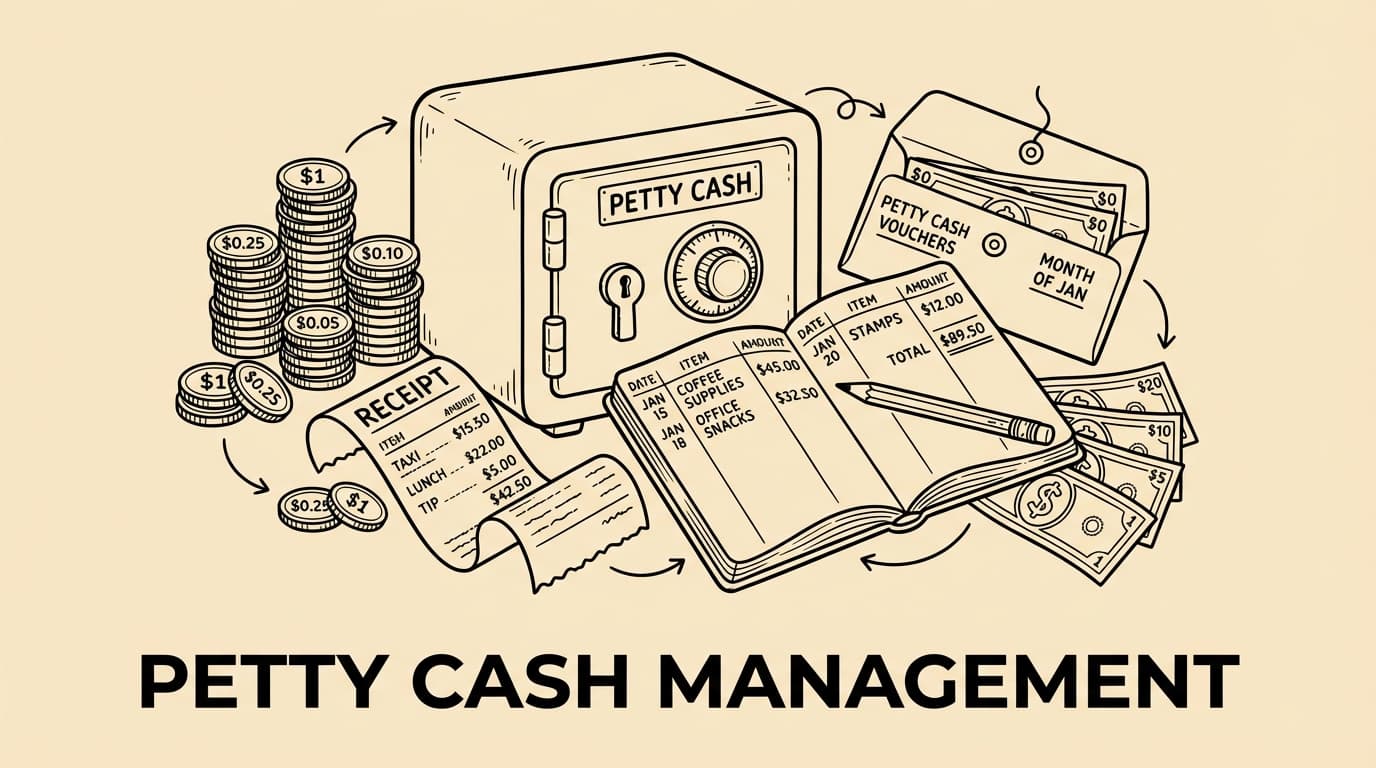
Petty cash is small by design, but unmanaged small cash creates surprisingly large accounting work. A missing receipt, an unclear purchase reason or a forgotten top-up can turn a simple office errand into a month-end reconciliation problem. The goal of petty cash management is not to eliminate every cash purchase; it is to make the few purchases that still need cash easy to authorize, document and explain later.
Define the scope and ownership
Modern finance teams often reduce cash use through cards, invoices and reimbursement apps. Yet petty cash still appears in retail locations, workshops, events, travel days and offices where a quick local purchase is unavoidable. A good process defines when cash is acceptable, who holds it, which evidence is required and how the balance is checked. That clarity protects employees as much as it protects finance.
Start with scope. State which teams, sites or events may use petty cash and which categories are allowed. Typical examples are small office supplies, postage, parking, emergency travel costs, local courier fees or event refreshments below a defined threshold. Prohibit recurring subscriptions, personal items, split purchases designed to avoid approval, and anything that should be bought through procurement.
Set the float, limits and replenishment rules
Ownership should be explicit. Each cash box needs one custodian, one deputy and one finance contact. The custodian is responsible for the physical money, receipts, ledger entries and safe storage; finance is responsible for policy, review and reconciliation. If several people can access the box without logging withdrawals, accountability disappears and every later investigation becomes uncomfortable.
Set a fixed float that matches real usage. Too little cash creates constant replenishment requests; too much cash increases risk and hides process problems. Many companies start with a modest amount per location and adjust after two or three reconciliation cycles. Define a maximum single transaction, a monthly review threshold and a rule for when the box is replenished.
Receipt rules that finance can actually enforce
Replenishment should be evidence-based. Finance should only top up the float when the custodian submits receipts, ledger entries and the remaining cash count. The total of cash on hand plus documented spend should equal the approved float. If it does not, the difference must be explained before more cash is issued. This simple equation is the backbone of petty cash control.
Receipt rules need to be practical. The policy should say which document is acceptable, which data must be readable, how to record VAT or sales tax where relevant, and what to do if a receipt is lost. A handwritten note may be acceptable for a rare lost receipt, but it should include date, merchant, amount, business purpose, employee name and manager confirmation. Repeated lost receipts should trigger a review.
Approvals and exceptions
Every entry should connect a purchase to a business reason. A ledger line that says only ‘miscellaneous’ is not useful. Better entries include the date, category, cost centre, amount, tax treatment if applicable, employee, approver and a short purpose. The language does not need to be legalistic; it needs to be clear enough that another finance colleague can understand the spend months later.
Approval design depends on risk. Very small purchases can be approved by the custodian at the point of use if they fit the policy. Unusual categories, higher amounts or repeat purchases should require manager or finance approval before cash is handed out. The policy should also explain emergency exceptions, because real business situations occasionally happen outside normal office hours.
Reconciliation routine: daily, weekly or monthly?
Segregation of duties is useful even in a small company. The person who spends cash should not be the only person who approves it, records it and reconciles the box. In a tiny team that may not be perfectly possible, but finance can still add compensating controls such as periodic review by a founder, accountant or office manager who was not involved in the transaction.
Choose a reconciliation rhythm that fits transaction volume. A busy retail counter might need daily cash counts, while a small office cash box may be fine with weekly or monthly reconciliation. The important point is consistency. Reconciliation should compare the approved float, cash count, receipts, ledger entries and outstanding advances, then document who checked it and when.
| Check | What finance verifies | Evidence |
|---|---|---|
| float | Approved amount equals cash plus documented spend | ledger + receipt |
| approval | Exceptions are approved before or shortly after spend | Workflow note |
| audit trail | Reviewer, timestamp and variance note are visible | Monthly review |
Controls that prevent leakage without slowing teams
Differences should be investigated while memories are fresh. Small overages or shortages can come from rounding, forgotten receipts or data entry errors. Larger or repeated differences may indicate weak controls, unclear rules or misuse. The process should avoid blame-first language, but it should not ignore patterns. A short variance note is better than silently adjusting the ledger.
Digital tools can support a cash process without pretending cash is digital. Employees can photograph receipts immediately, custodians can attach images to ledger entries, and finance can review exceptions before month-end. Tools like Bill.Dock help by keeping receipts searchable, linking them to categories and approvals, and giving finance a cleaner audit trail even when the original payment was cash.
How digital tools support a cash process
Avoid building a parallel bureaucracy. If the petty cash form is harder than submitting a card expense, people will route around it. Use a one-page policy, a short ledger template and clear examples. Make the allowed categories visible near the cash box. The best process is strict about evidence and ownership, but simple enough that busy employees actually follow it.
Common mistakes include using petty cash as a substitute for procurement, allowing undocumented IOUs, topping up the box without reconciliation, storing receipts separately from the ledger, and failing to close the box when a custodian leaves. Another frequent issue is letting old balances roll forward for months. Cash processes need clean cut-offs, not vague promises to fix the record later.
Common petty cash mistakes
Rollout should start with a baseline count. Record the current cash balance, collect existing receipts, close any old advances and document the approved float. Then brief custodians and managers on the new rules, publish examples and set the first reconciliation date. After the first month, review exceptions and adjust thresholds if the policy is too strict or too loose.
Petty cash also belongs in the wider expense policy. Employees should know when to use cash, when to use a company card, when to request reimbursement and when to ask procurement. Finance should report petty cash trends alongside other expense categories so the company can spot avoidable cash spend and move repeated purchases into a cleaner channel.
Rollout checklist for finance teams
A well-run petty cash process is boring in the best possible way. The cash count matches, receipts are available, exceptions are documented and no one spends hours reconstructing tiny purchases. That boring reliability is valuable: it reduces audit stress, speeds month-end work and lets employees solve small practical problems without creating hidden finance risk.
FAQ
How much petty cash should a company keep?
Keep only enough for normal small purchases between reconciliations. Review actual usage for two or three cycles before raising the float.
Who should own petty cash?
One named cash custodian should hold the cash, with a deputy and finance reviewer. Shared anonymous access is the main control weakness.
Can a lost receipt be accepted?
A rare lost-receipt declaration can be accepted if it records date, amount, merchant, purpose and approval. Repeated use should be escalated.
Should petty cash be replaced by cards?
Often yes for recurring or higher-value spend. Keep petty cash only where cash is genuinely practical and document why it remains needed.
Conclusion
Petty cash also belongs in the wider expense policy. Employees should know when to use cash, when to use a company card, when to request reimbursement and when to ask procurement. Finance should report petty cash trends alongside other expense categories so the company can spot avoidable cash spend and move repeated purchases into a cleaner channel.
A well-run petty cash process is boring in the best possible way. The cash count matches, receipts are available, exceptions are documented and no one spends hours reconstructing tiny purchases. That boring reliability is valuable: it reduces audit stress, speeds month-end work and lets employees solve small practical problems without creating hidden finance risk.
Practical next step: Tools like Bill.Dock can help capture receipts, connect approvals to records and keep a searchable audit trail for finance review.
Practical example
Example: an employee buys emergency postage for a customer shipment, attaches the receipt, records the cost centre and explains why procurement was not practical. The cash custodian can accept it because the amount and category fit the policy.
Practical example
Counter-example: a team repeatedly buys the same supplies with petty cash every week. That pattern should move to procurement or a company card because repeated cash use creates unnecessary reconciliation work and weaker pricing control.
Practical example
Manager note: treat exceptions as learning signals. If many employees need the same exception, the limit, category wording or purchasing channel may be wrong. Finance should improve the rule rather than approve unclear cash spend forever.
Practical example
Example: an employee buys emergency postage for a customer shipment, attaches the receipt, records the cost centre and explains why procurement was not practical. The cash custodian can accept it because the amount and category fit the policy.