
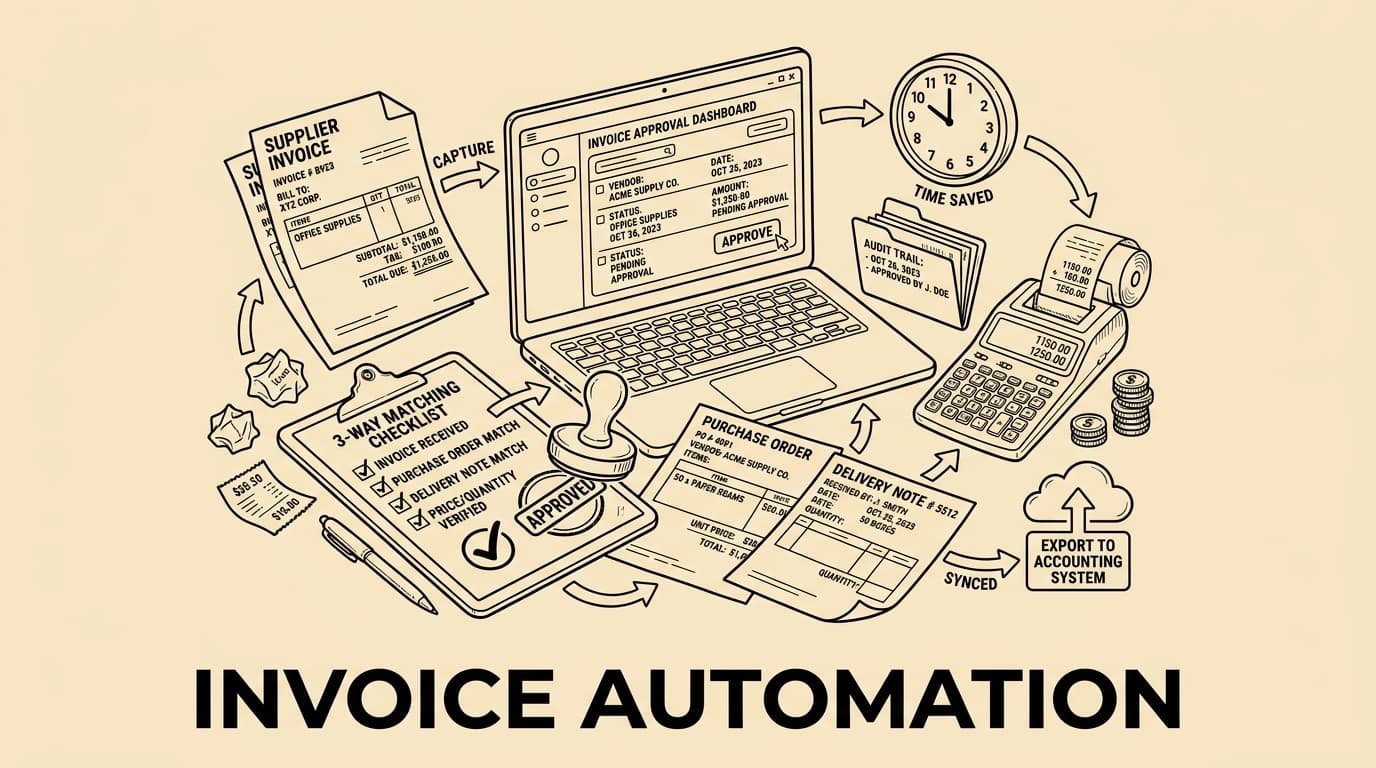
Invoice processing automation turns incoming supplier invoices from scattered emails and PDFs into a controlled workflow. Instead of retyping supplier names, amounts, VAT lines and due dates, finance teams can capture documents once, validate the important fields, route approvals, match against purchase orders or delivery confirmations, and export structured data to accounting. The practical value is speed, but the strategic value is control: fewer duplicates, clearer ownership, better cash visibility and a cleaner audit trail.
What invoice processing automation means
What invoice processing automation means should be designed as a control point, not as another digital filing cabinet. A strong workflow records central inboxes, email forwarding, supplier portals and mobile capture and makes the next decision obvious: approve, query, match, reject, or export. The goal is not to remove judgement from finance; it is to remove repeated copying, missing context and late follow-up. For international teams, keep VAT, sales tax, GST, EUR, GBP and USD evidence visible so auditors can trace every decision. Teams should document which rule made the decision, which person changed it, and what evidence remains attached to the invoice.
Map the current invoice journey
Map the current invoice journey should be designed as a control point, not as another digital filing cabinet. A strong workflow records supplier name, invoice number, tax ID, IBAN, dates, currency, net, VAT and gross amount and makes the next decision obvious: approve, query, match, reject, or export. The goal is not to remove judgement from finance; it is to remove repeated copying, missing context and late follow-up. For international teams, keep VAT, sales tax, GST, EUR, GBP and USD evidence visible so auditors can trace every decision. Teams should document which rule made the decision, which person changed it, and what evidence remains attached to the invoice.
- central inboxes, email forwarding, supplier portals and mobile capture
- supplier name, invoice number, tax ID, IBAN, dates, currency, net, VAT and gross amount
- purchase-order matching, receipt confirmation and budget owner checks
- thresholds, cost centres, projects, recurring suppliers and exception rules
Capture invoices at the source
Capture invoices at the source should be designed as a control point, not as another digital filing cabinet. A strong workflow records purchase-order matching, receipt confirmation and budget owner checks and makes the next decision obvious: approve, query, match, reject, or export. The goal is not to remove judgement from finance; it is to remove repeated copying, missing context and late follow-up. For international teams, keep VAT, sales tax, GST, EUR, GBP and USD evidence visible so auditors can trace every decision. Teams should document which rule made the decision, which person changed it, and what evidence remains attached to the invoice.
Extract and validate key fields
Extract and validate key fields should be designed as a control point, not as another digital filing cabinet. A strong workflow records thresholds, cost centres, projects, recurring suppliers and exception rules and makes the next decision obvious: approve, query, match, reject, or export. The goal is not to remove judgement from finance; it is to remove repeated copying, missing context and late follow-up. For international teams, keep VAT, sales tax, GST, EUR, GBP and USD evidence visible so auditors can trace every decision. Teams should document which rule made the decision, which person changed it, and what evidence remains attached to the invoice.
Match invoices to orders and receipts
Match invoices to orders and receipts should be designed as a control point, not as another digital filing cabinet. A strong workflow records audit trails, retention periods, exports, bank reconciliation and fraud signals and makes the next decision obvious: approve, query, match, reject, or export. The goal is not to remove judgement from finance; it is to remove repeated copying, missing context and late follow-up. For international teams, keep VAT, sales tax, GST, EUR, GBP and USD evidence visible so auditors can trace every decision. Teams should document which rule made the decision, which person changed it, and what evidence remains attached to the invoice.
- central inboxes, email forwarding, supplier portals and mobile capture
- supplier name, invoice number, tax ID, IBAN, dates, currency, net, VAT and gross amount
- purchase-order matching, receipt confirmation and budget owner checks
- thresholds, cost centres, projects, recurring suppliers and exception rules
Route approvals by risk and budget
Route approvals by risk and budget should be designed as a control point, not as another digital filing cabinet. A strong workflow records central inboxes, email forwarding, supplier portals and mobile capture and makes the next decision obvious: approve, query, match, reject, or export. The goal is not to remove judgement from finance; it is to remove repeated copying, missing context and late follow-up. For international teams, keep VAT, sales tax, GST, EUR, GBP and USD evidence visible so auditors can trace every decision. Teams should document which rule made the decision, which person changed it, and what evidence remains attached to the invoice.
Handle VAT and tax evidence
Handle VAT and tax evidence should be designed as a control point, not as another digital filing cabinet. A strong workflow records supplier name, invoice number, tax ID, IBAN, dates, currency, net, VAT and gross amount and makes the next decision obvious: approve, query, match, reject, or export. The goal is not to remove judgement from finance; it is to remove repeated copying, missing context and late follow-up. For international teams, keep VAT, sales tax, GST, EUR, GBP and USD evidence visible so auditors can trace every decision. Teams should document which rule made the decision, which person changed it, and what evidence remains attached to the invoice.
Prepare accounting exports
Prepare accounting exports should be designed as a control point, not as another digital filing cabinet. A strong workflow records purchase-order matching, receipt confirmation and budget owner checks and makes the next decision obvious: approve, query, match, reject, or export. The goal is not to remove judgement from finance; it is to remove repeated copying, missing context and late follow-up. For international teams, keep VAT, sales tax, GST, EUR, GBP and USD evidence visible so auditors can trace every decision. Teams should document which rule made the decision, which person changed it, and what evidence remains attached to the invoice.
- central inboxes, email forwarding, supplier portals and mobile capture
- supplier name, invoice number, tax ID, IBAN, dates, currency, net, VAT and gross amount
- purchase-order matching, receipt confirmation and budget owner checks
- thresholds, cost centres, projects, recurring suppliers and exception rules
Measure exceptions and cycle time
Measure exceptions and cycle time should be designed as a control point, not as another digital filing cabinet. A strong workflow records thresholds, cost centres, projects, recurring suppliers and exception rules and makes the next decision obvious: approve, query, match, reject, or export. The goal is not to remove judgement from finance; it is to remove repeated copying, missing context and late follow-up. For international teams, keep VAT, sales tax, GST, EUR, GBP and USD evidence visible so auditors can trace every decision. Teams should document which rule made the decision, which person changed it, and what evidence remains attached to the invoice.
Implementation checklist
Implementation checklist should be designed as a control point, not as another digital filing cabinet. A strong workflow records audit trails, retention periods, exports, bank reconciliation and fraud signals and makes the next decision obvious: approve, query, match, reject, or export. The goal is not to remove judgement from finance; it is to remove repeated copying, missing context and late follow-up. For international teams, keep VAT, sales tax, GST, EUR, GBP and USD evidence visible so auditors can trace every decision. Teams should document which rule made the decision, which person changed it, and what evidence remains attached to the invoice.
Automation and control model
| Process step | Automation rule | Human control |
|---|---|---|
| Capture | Read supplier, amount and due date | Review unreadable fields |
| Matching | Compare invoice, order and receipt | Resolve exceptions |
| Approval | Route by amount and cost centre | Confirm business purpose |
| Export | Send approved data to accounting | Check period and tax treatment |
Tools like Bill.Dock help finance teams capture invoices and receipts, route approvals, keep evidence searchable, and export clean data to accounting systems.
FAQ
Which invoice steps should be automated first?
Start with central capture, duplicate detection, field extraction, approval routing and accounting export. These steps remove the most manual work without changing every finance policy at once.
Does automation replace finance review?
No. It should remove copying and chasing, while keeping finance responsible for exceptions, supplier risk, policy decisions and final posting.
How accurate does OCR need to be?
High accuracy helps, but validation rules matter more: supplier, invoice number, date, amount, VAT, currency and bank details should be checked before export.
What is a good success metric?
Track cycle time, first-pass match rate, duplicate invoices prevented, missing approvals, late-payment fees and the share of invoices exported without rework.
Conclusion
Invoice processing automation works best when it is implemented as a finance control system, not only as an OCR project. Start with a clear intake channel, validate the fields that affect payment and tax, route approvals by risk, preserve evidence, and measure exceptions every month. The result is faster processing, fewer mistakes and better confidence before invoices reach the ledger.